


JOURNEY Review – Ascension
- Tim C.

- Apr 12, 2019
- 4 min read
Updated: May 5, 2020
SPOILER-FREE REVIEW

An undeniably enchanting and incredibly beautiful trek, Journey more than lives up to its name.
I can’t really claim to have had spiritual experiences. I’m a sceptic and I’m not hugely in touch with my spiritual side. I don’t worship, pray or observe. Still, something has helped me understand the depth of feeling those acts provide others with. I found it in the strangest of places: on an online storefront alongside the grittiest shooters and the bloodiest fighting games of this gaming generation. Journey is a game with a breath and immense energy behind it. As a voiceless protagonist swathed in flowing cloth, you’re on a pilgrimage to the summit of a mountain, travelling through a land of shifting sands and hidden secrets. Along the way, you’ll encounter fellow pilgrims, cloth animals and musical puzzles to solve. Any further story detail is only subtly implied. Like many artworks, its meaning is subject to interpretation. And Journey is definitely a work of art.


Journey alternates between gentle and intense, and its gameplay is the former. The game’s puzzles are captivating in their own way, relying on simple button presses that make your cloth person emit a single drawn-out musical note accompanied by a burst of white light. The solutions are never handed to you, but at the same time Journey offers the perfect amount of guidance. At the beginning, it shows the player this simple aura-emitting mechanic, which helps you figure out how to solve all of the game’s upcoming puzzles. Some puzzles also require you to jump and reach new areas. You can also float in the air for a limited time, determined by the length of the flowing scarf adorned with symbols wrapped around your character’s neck. You can lengthen your scarf by locating glowing symbols while exploring, a soft version of traditional video-game levelling.


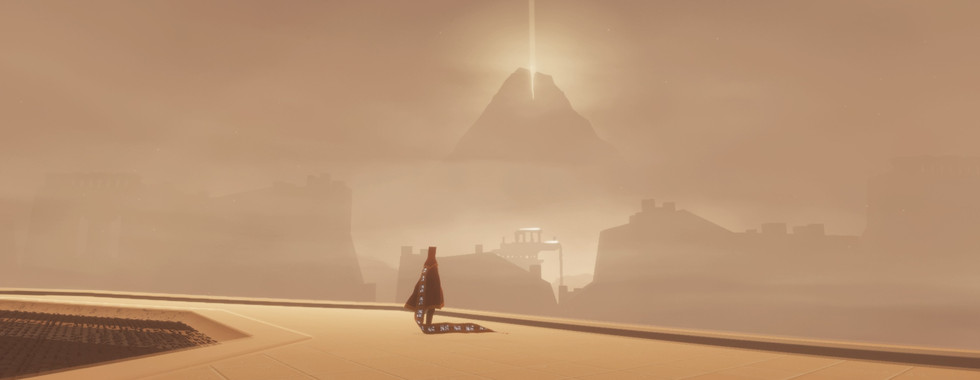

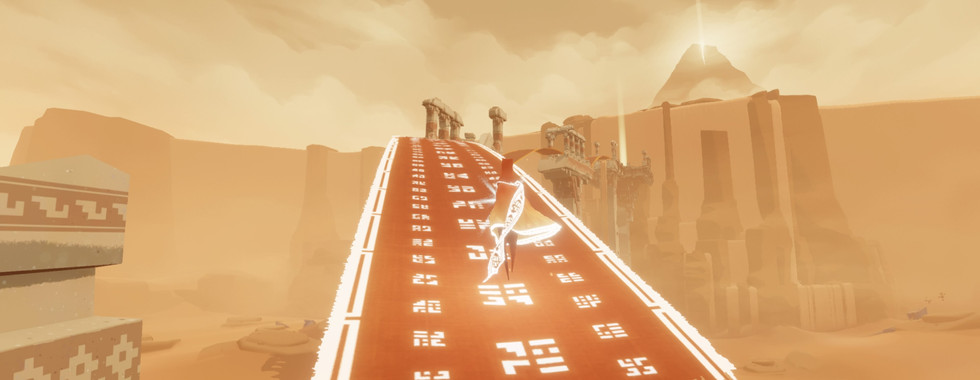


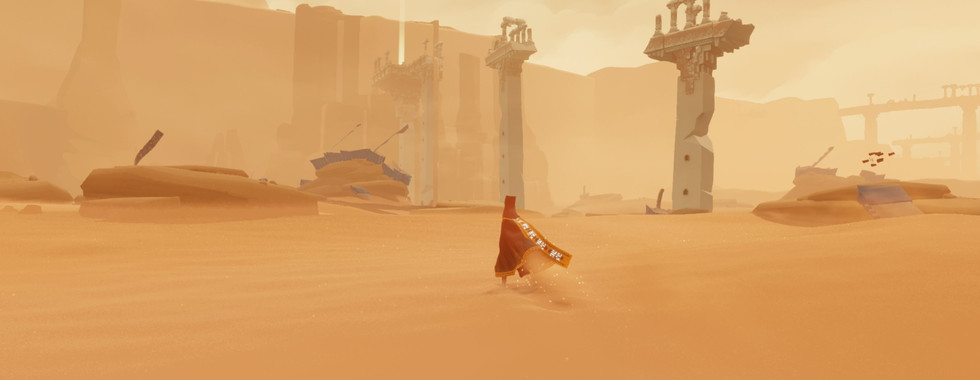


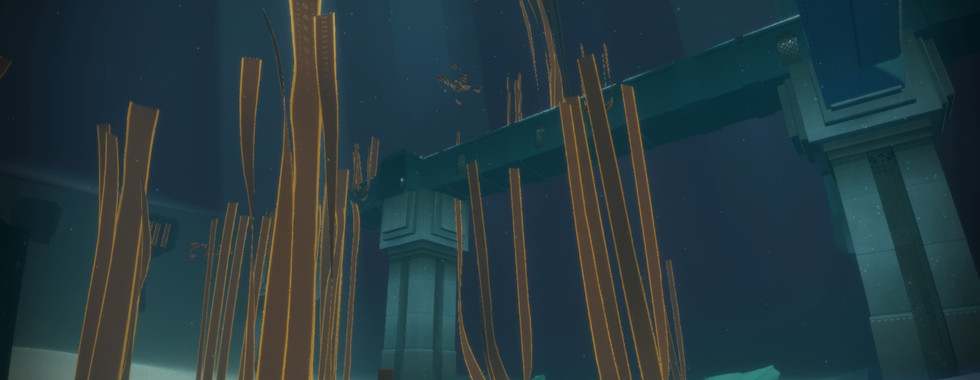
Without detours, the journey might take you an hour and a half. If you explore, it could be longer. Simplified gameplay brings the extraordinary art design straight to the fore. You’ll cross vast expanses of shimmering sand dunes, glowing in the light of the sun burning overhead. Journey’s particle effects are possibly the best I’ve ever seen. Somehow, it maintains the illusion that every single grain of sand has been individually animated and worked upon. Drifting through an underground cavern, the light turns cold blue. Cloth sprouts from the ground swaying gently like seaweed in ocean currents, while shoals of cloth creatures gather around them. One moment, you’re swept up in a sandstorm. The next, you’ll swear you’re underwater. On the mountain cliffs, those grains of sand seamlessly transform into glittering powder snow through a simple colour change. Using the same particles to create vastly different environments is an impressive feat of game design. In all this, your character will soar and drift through, cloth billowing behind them, scarf flowing through the air. It’s captivating and ethereal.




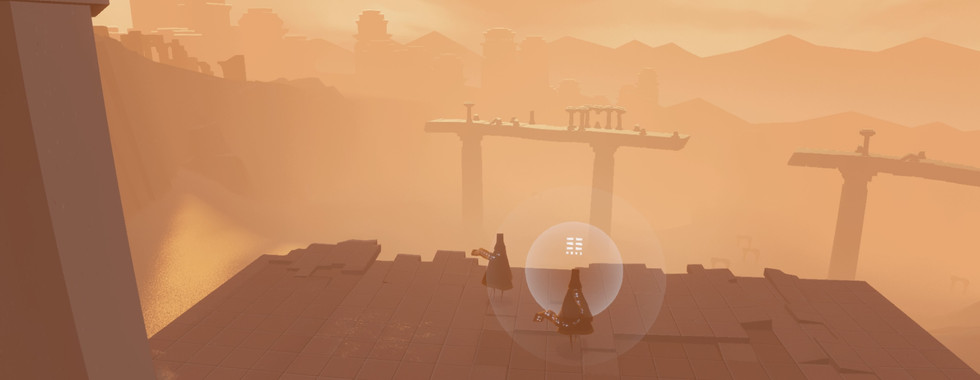


It’s all accompanied by great sound design. Even those basic notes are rich and full of depth, while Austin Wintory’s score is spirited and relentless, inspired by what seems like a myriad of different cultures. It stirs up powerful emotions and crosses cultural boundaries while doing so. Journey is a game anyone can play, no matter where they’re from. There’s only one language in it: music. Gliding gracefully through ancient ruins accompanied by a flock of flying cloth creatures, listening to the steady roar of the sand underfoot, accompanied by swelling orchestral music, was revelatory.


Journey also twists traditional multiplayer. You can go offline and experience Journey solo, and the loneliness quickly becomes striking, but you can choose to play online too. You’ll likely encounter fellow pilgrims, even though it’s been seven years since release. There’s no way to communicate with them, other than through those musical notes I mentioned. I realised that, even online, people give part of themselves to their avatars, and that I was doing it too. Some were peppy, constantly pinging off notes, while others were quietly and stoically taking one step after another. You share a goal, and Journey takes that and builds. There’s a sense of true companionship that transcends ordinary barriers of location and language. That a game fosters that bond between total strangers is nothing short of remarkable. Coming across a new stranger was joy, and no matter how short our time together was, leaving each and every one of them filled me with genuine and unexpected sadness.


Whether played solo or together, Journey never fails to highlight its human elements. I have no idea who those strangers were. I have no idea what they sound like, or where they’re from, or what gender they are. Even so, this game brought us together to share something, even for a little while. That’s the spiritual element of the game: companionship with another in the search of something greater than yourself. Visually striking, enchanting, ethereal. These are all words I’d use to describe this game but every once in a while, there are games that can’t be described in simple terms. Journey is one of these.


Comments